

The Psychology of Emotional Neglect in Marriage: A Psychiatrist’s Guide to Couple Counseling and Family Relationships
Marriage is not sustained by legal commitment, financial stability, physical attraction, or social recognition alone. A healthy marital relationship requires emotional availability, mutual respect, trust, effective communication, intimacy, and a shared sense of responsibility.
In clinical practice, relationship difficulties often develop gradually. Couples do not necessarily experience a major conflict at the beginning of their problems. Instead, emotional distance may emerge through repeated misunderstandings, unanswered messages, neglected emotional needs, family interference, criticism, avoidance of intimacy, and an inability to resolve disagreements constructively.
One partner may feel that their career, personal ambitions, or family of origin should always take priority. The other may gradually experience rejection, loneliness, emotional exhaustion, and a loss of importance within the marriage. When these experiences remain unaddressed, the relationship can enter a destructive cycle in which both partners feel misunderstood but neither knows how to restore the connection.
From a psychiatric and couple-counseling perspective, this pattern deserves serious attention. Emotional neglect in marriage is not simply a matter of one partner being busy or the other being overly sensitive. It may involve persistent patterns of emotional unavailability, invalidation, withdrawal, unresolved resentment, and ineffective relationship boundaries.
This article explores the psychological dynamics behind marital emotional neglect, the influence of family relationships, the importance of emotional and physical intimacy, and the role of professional couple counseling in preventing relationship deterioration.
The situations discussed are presented as a fictional educational case study. They are not intended to represent the real lives, marriages, or personal relationships of any public figures.
1. Understanding Emotional Neglect in Marriage
Emotional neglect in marriage occurs when one or both partners repeatedly fail to recognize, respond to, or appropriately address the emotional needs of the relationship.
It does not always involve deliberate cruelty. Sometimes a partner may genuinely believe that providing financial support, maintaining a successful career, or fulfilling family obligations is sufficient to maintain a marriage.
However, emotional connection requires more than practical contributions.
A spouse may need reassurance, affection, meaningful conversation, companionship, appreciation, and a sense of being valued. When these needs are repeatedly ignored, the affected partner may begin to feel emotionally disconnected.
Common signs of emotional neglect include:
Repeatedly ignoring a spouse’s emotional concerns.
Showing little interest in the partner’s daily experiences.
Avoiding meaningful conversations.
Dismissing feelings as unimportant or unreasonable.
Prioritizing external relationships over marital responsibilities without mutual agreement.
Withholding affection or emotional reassurance.
Failing to address recurring relationship problems.
Responding to concerns with criticism, defensiveness, or silence.
Making a partner feel lonely despite living together.
It is important to distinguish occasional emotional unavailability from a persistent pattern. Every individual experiences stress, fatigue, professional pressure, and personal difficulties. A single disappointing evening does not establish emotional neglect.
The clinical concern arises when disconnection becomes a repeated relationship pattern and both partners lose the ability or willingness to repair it.
2. The Psychological Cycle of Rejection and Emotional Withdrawal
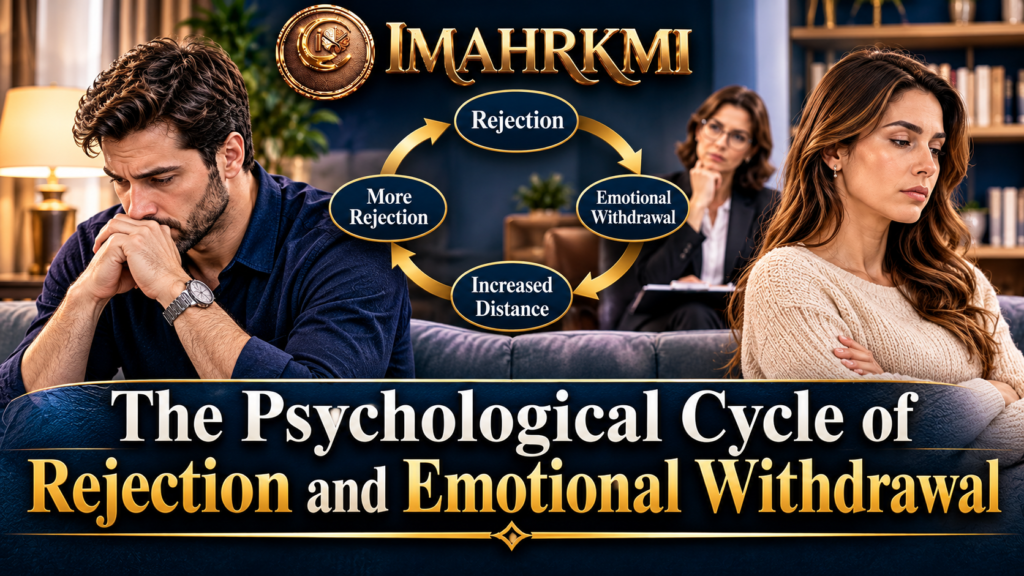
One of the most damaging relationship patterns develops when one partner repeatedly seeks emotional connection while the other responds with avoidance or dismissal.
For example, a husband may attempt to discuss his feelings after returning home from work. His wife may be occupied with professional responsibilities, telephone conversations, or family matters. If she repeatedly postpones the conversation without returning to it, he may interpret her behavior as a sign that he is not important.
Initially, he may express disappointment. Later, he may become frustrated. Eventually, he may stop communicating altogether.
This pattern can create a cycle:
One partner seeks attention, reassurance, or emotional closeness.
The other partner experiences the request as pressure or criticism.
The second partner withdraws or becomes defensive.
The first partner feels rejected and increases attempts to communicate.
Both partners become frustrated.
Communication becomes less constructive.
Emotional distance increases.
In couple therapy, this pattern is sometimes described as a pursue-withdraw dynamic.
The pursuing partner may become increasingly demanding because they feel disconnected. The withdrawing partner may become increasingly distant because they feel overwhelmed or criticized.
Neither partner necessarily intends to damage the relationship. Nevertheless, the pattern can become self-reinforcing.
A psychiatrist or trained couple therapist should explore the emotional experiences and behavioral patterns underlying this cycle rather than automatically assigning blame to one spouse.
3. Family Interference and the Psychology of Marital Boundaries
Family relationships are important in many cultures, particularly in South Asian households, where parents, siblings, and extended family members may remain closely involved in an individual’s life after marriage.
Maintaining a loving relationship with parents and siblings is not inherently harmful to marriage. In fact, supportive family relationships can contribute positively to emotional well-being.
The difficulty develops when family involvement consistently overrides the couple’s ability to make independent decisions.
For example, imagine a newly married woman who consults her mother or siblings about almost every marital disagreement. She may share private conversations, seek approval before making ordinary decisions, or allow relatives to influence how she responds to her husband.
Her husband may feel that he is not being treated as an equal partner.
Similarly, a husband who allows his parents to control marital decisions, criticizes his wife in front of relatives, or repeatedly prioritizes his family of origin over reasonable marital agreements may create comparable distress.
The issue is not whether someone loves their family. The issue is whether they can maintain appropriate boundaries while respecting their marriage.
What Are Healthy Marital Boundaries?
Healthy boundaries allow individuals to maintain meaningful family relationships without compromising the privacy, dignity, and independence of their marriage.
Examples include:
Discussing major marital decisions together before involving relatives.
Protecting private disagreements from unnecessary public discussion.
Respecting both partners’ relationships with their families.
Avoiding pressure to choose between a spouse and parents.
Establishing mutually agreed limits on family involvement.
Refusing to allow relatives to insult or intimidate either partner.
Making financial, residential, and parenting decisions through respectful discussion.
A useful therapeutic principle is that marriage should establish a partnership, not an isolation system. Couples should not be forced to abandon their families. They should learn to manage family relationships without allowing external pressure to dominate their marital decisions.
4. Emotional Intimacy and Physical Intimacy Are Connected
Physical intimacy is an important part of many marriages, but it should never be treated as an obligation that overrides consent, comfort, or personal boundaries.
Sexual intimacy is influenced by several factors, including emotional security, physical health, stress, relationship satisfaction, sexual desire, past experiences, medication effects, and psychological well-being.
A partner may not feel interested in sexual activity because of fatigue, anxiety, depression, hormonal changes, pain, unresolved conflict, or simply a difference in sexual desire.
These experiences require understanding rather than accusation.
Consider a fictional newly married couple. During the first night, the wife feels exhausted and asks to rest. Her husband may initially accept this without difficulty. On subsequent nights, however, she repeatedly postpones intimacy while also avoiding meaningful conversations about the reasons.
The husband may begin to interpret the repeated postponement as personal rejection. The wife may feel pressured or misunderstood. Without open communication, both partners can develop negative assumptions.
The central clinical issue is not that one spouse must agree to sexual activity. Consent must remain voluntary at all times. The concern is whether the couple can communicate honestly about intimacy, understand each other’s needs, and seek help when differences become a source of ongoing distress.
Common Psychological Factors Affecting Sexual Intimacy
1. Stress and exhaustion
Professional pressure, inadequate sleep, household responsibilities, and chronic stress can reduce sexual interest.
2. Anxiety and performance concerns
Fear of disappointing a partner, sexual performance anxiety, and negative expectations may interfere with intimacy.
3. Relationship conflict
Unresolved anger, criticism, distrust, and emotional disconnection can reduce desire.
4. Differences in sexual desire
Partners may naturally have different levels of sexual interest. A difference in desire is not automatically a disorder.
5. Medical and psychological factors
Depression, anxiety, hormonal conditions, chronic pain, certain medications, and sexual health conditions may affect sexual functioning.
6. Lack of communication
When partners cannot discuss preferences, boundaries, concerns, or discomfort, misunderstandings may become increasingly difficult to resolve.
A qualified healthcare professional can help determine whether the problem is primarily relational, psychological, medical, sexual, or a combination of these factors.
5. Career Ambition and Marital Responsibility: Finding a Healthy Balance
Professional development is valuable. Women and men both have the right to pursue education, financial independence, meaningful careers, and personal goals.
Marriage should not require either partner to abandon their professional identity.
However, professional ambition and marital responsibility should not be treated as mutually exclusive.
A relationship may deteriorate when one partner consistently assumes that career demands justify ignoring emotional commitments. The other partner may begin to feel that the marriage exists only when it is convenient.
A similar problem can occur when a spouse expects the other to sacrifice every professional opportunity for the relationship.
Neither extreme creates a sustainable partnership.
What Does a Healthy Balance Look Like?
A healthy marriage allows both partners to:
Pursue professional goals.
Share household and family responsibilities.
Schedule meaningful time together.
Communicate changes in work schedules.
Respect each other’s achievements.
Discuss practical compromises.
Recognize when work pressure is affecting the relationship.
A spouse should not have to compete with a partner’s career for basic respect and attention. At the same time, a partner’s professional success should not be treated as evidence of disloyalty or a lack of commitment.
The goal is mutual adjustment rather than unilateral sacrifice.
6. The Damage Caused by Repeated Criticism and Emotional Invalidation
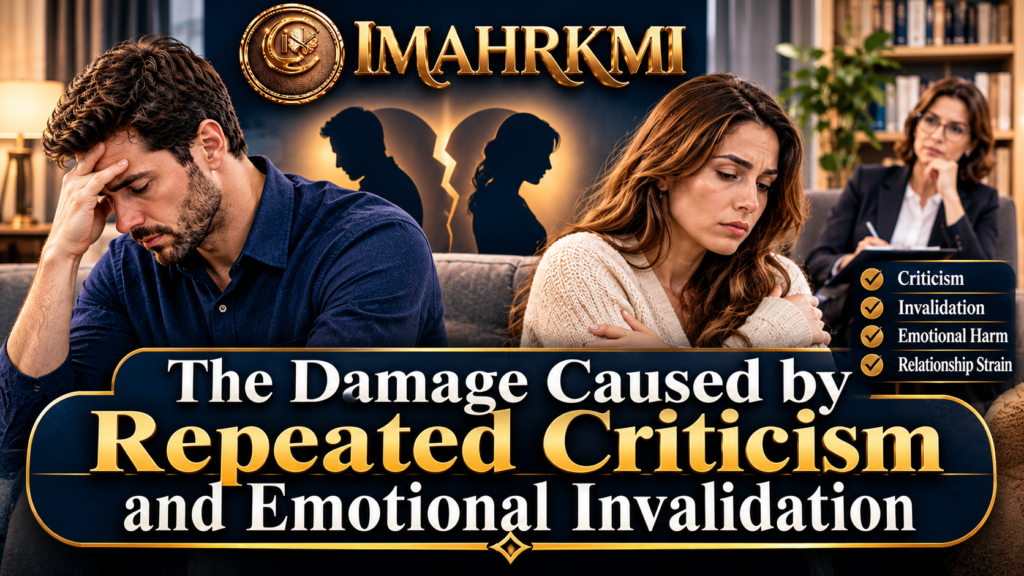
Emotional invalidation occurs when a person’s feelings, concerns, or experiences are repeatedly dismissed, minimized, or treated as unreasonable.
Examples include statements such as:
“You are always overreacting.”
“Your feelings do not matter.”
“I do not have time for these conversations.”
“You are too sensitive.”
“You should be grateful for what I provide.”
When such communication becomes routine, the affected partner may stop expressing emotional needs.
Repeated criticism can also damage self-esteem and relationship security. A spouse may begin to anticipate rejection before initiating a conversation.
This can lead to emotional withdrawal, resentment, reduced affection, and a breakdown in trust.
However, it is important to recognize that disagreement itself is not emotional abuse. Couples can disagree strongly while still treating each other respectfully.
The concern becomes more serious when communication involves intimidation, humiliation, threats, coercive control, persistent degradation, or fear.
In such circumstances, individual assessment and appropriate safety planning may be more important than immediately beginning joint couple therapy.
7. The Silent Partner: Understanding Emotional Withdrawal
A common misconception is that a person who becomes quiet has stopped caring.
In reality, silence can have several psychological explanations.
A partner may withdraw because they are emotionally exhausted, afraid of another argument, unable to express their feelings, or convinced that communication will not change anything.
In relationship psychology, emotional withdrawal can sometimes function as self-protection.
For example, a husband may initially attempt to discuss his concerns. After repeated unsuccessful conversations, he may reduce his communication, stop sharing personal experiences, and spend more time alone.
His partner may interpret this silence as indifference.
However, the silence may reflect accumulated disappointment.
There is an important distinction between a temporary pause to regulate emotions and prolonged withdrawal used to punish or control another person.
A healthy pause might sound like:
“I am becoming overwhelmed. I need some time to calm down, but I want us to return to this conversation tonight.”
An unhealthy pattern may involve refusing to communicate for days, withholding necessary information, or using silence to create fear and uncertainty.
Therapy can help couples identify the difference and develop healthier ways to manage emotional overload.
8. How Resentment Develops in a Marriage
Resentment rarely appears suddenly. It often develops through repeated experiences that remain unresolved.
A spouse may remember:
Being ignored during a difficult period.
Having emotional concerns dismissed.
Being criticized in front of relatives.
Feeling excluded from important decisions.
Experiencing repeated broken promises.
Receiving little affection or appreciation.
Being expected to make all the compromises.
Over time, these experiences can influence how the person interprets ordinary interactions.
A simple question may be perceived as criticism. A delayed telephone call may be interpreted as rejection. A minor disagreement may trigger anger connected to years of unresolved disappointment.
This is why couple counseling should not focus exclusively on the latest argument.
A therapist needs to understand the history of the relationship, the recurring conflict patterns, the emotional meaning of specific events, and the repair attempts that have or have not worked.
The goal is to understand how resentment developed and whether both partners are willing to change the behaviors maintaining it.
9. Why Some Couples Reach the Point of Divorce
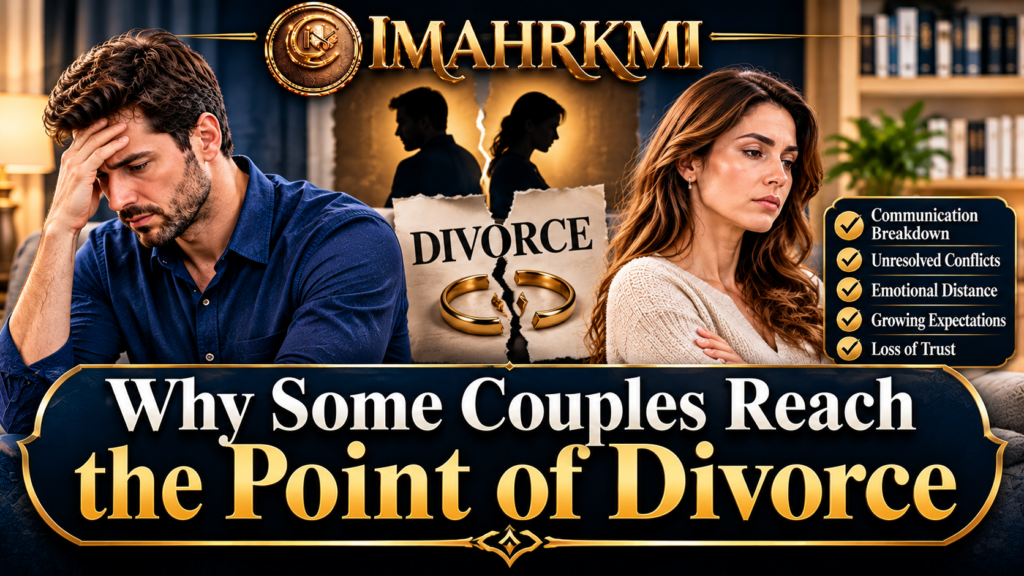
Divorce is a complex decision influenced by emotional, social, financial, legal, cultural, and personal factors.
It is rarely appropriate to attribute the end of a marriage to one isolated disagreement.
However, several recurring relationship problems may contribute to marital breakdown:
Persistent communication failure: Couples repeatedly discuss problems but never reach meaningful agreements.
Emotional disconnection: Partners no longer experience the relationship as a source of companionship or support.
Unresolved resentment: Past disappointments continue to influence present interactions.
Family interference: Relatives repeatedly become involved in private marital decisions.
Intimacy difficulties: Sexual or emotional concerns remain unaddressed.
Loss of trust: Repeated dishonesty, secrecy, or broken agreements damage relationship security.
Unequal responsibilities: One partner feels that the emotional, financial, or practical burden of marriage is unfairly distributed.
Lack of repair attempts: Neither partner consistently takes responsibility for improving the relationship.
A marriage may reach a stage where one or both partners no longer believe that meaningful improvement is possible.
Nevertheless, divorce should not be presented as an inevitable outcome of emotional distance. Some couples rebuild their relationship through honest communication, professional support, and sustained behavioral change.
Others may decide that separation is the healthiest or safest option.
The appropriate decision depends on the circumstances of the individual relationship.
10. The Psychology of Regret After Divorce
A particularly painful experience may occur when someone achieves professional success but later recognizes that important personal relationships have deteriorated.
Imagine a fictional woman who has built a successful career. She has financial independence, professional recognition, and social status. However, her marriage has ended.
She returns to her family home and discovers that professional achievement does not automatically resolve loneliness or emotional dissatisfaction.
She may remember conversations that were never completed, affection that was never expressed, and opportunities for reconciliation that were missed.
This experience can involve regret, grief, loneliness, and reflection.
However, it is important not to assume that a divorced person necessarily regrets the decision. Some people experience relief, safety, and improved well-being after leaving an unhealthy or harmful relationship.
Regret is individual. It cannot be used to judge every divorced woman or man.
What Does Relationship Regret Teach Us?
Relationship regret may encourage people to examine:
Whether they communicated their needs clearly.
Whether they listened to their partner.
Whether they maintained healthy boundaries.
Whether they dismissed repeated concerns.
Whether they allowed resentment to accumulate.
Whether they attempted meaningful repair.
Whether they recognized the difference between independence and emotional disconnection.
The purpose of reflection should be personal growth, not self-punishment.
A person’s worth is not determined by marital status. A successful life can include marriage, divorce, remarriage, or remaining single.
11. Couple Counseling: How a Psychiatrist Can Help
Couple counseling provides a structured environment in which partners can understand their relationship patterns, improve communication, and explore practical solutions.
A psychiatrist may assess psychological symptoms, relevant medical factors, sexual health concerns, and the broader mental health context when clinically appropriate.
A qualified couple therapist may also help partners identify recurring interaction patterns and develop healthier communication skills.
The therapeutic process generally begins with understanding the couple’s history and current concerns.
Step 1: Comprehensive Relationship Assessment
The therapist explores:
How the relationship began.
The couple’s expectations of marriage.
Their current sources of conflict.
Emotional and physical intimacy.
Family involvement.
Work and financial pressures.
Communication patterns.
Previous attempts to resolve disagreements.
Individual mental health concerns, where relevant.
The purpose is to understand the relationship rather than immediately decide who is right or wrong.
Step 2: Identifying the Core Conflict
Sometimes the presenting complaint is not the underlying problem.
For example, a couple may initially report frequent arguments about telephone use. A deeper assessment may reveal that one partner feels excluded from the other’s life, while the other feels constantly monitored.
The actual therapeutic target may be emotional security, trust, boundaries, or autonomy rather than telephone use itself.
Step 3: Improving Communication Skills
Couples can learn to express concerns without attacking each other’s character.
Instead of saying:
“You never care about me.”
A partner might say:
“I feel disconnected when we do not spend time together. I would like us to plan some time for each other.”
This approach communicates a personal experience and a specific request.
Step 4: Rebuilding Emotional Safety
Emotional safety means that partners can express concerns without expecting humiliation, threats, or immediate retaliation.
Therapy may help couples practice:
Active listening.
Emotional validation.
Respectful disagreement.
Appropriate apologies.
Clear boundaries.
Constructive conflict resolution.
Consistent follow-through.
Step 5: Addressing Intimacy Concerns
Where appropriate, therapy may explore sexual expectations, differences in desire, emotional closeness, sexual pain, anxiety, and relevant medical concerns.
The objective is not to pressure either partner into sexual activity. It is to support consent, mutual understanding, and a healthy approach to intimacy.
Step 6: Developing a Relationship Improvement Plan
Couples may agree on specific behavioral changes, such as:
Setting aside uninterrupted time together.
Establishing boundaries with relatives.
Sharing household responsibilities.
Discussing work schedules.
Addressing disagreements before they escalate.
Rebuilding trust through consistent actions.
Seeking additional individual or medical support when needed.
Progress should be assessed over time rather than judged by one positive conversation.
12. Practical Communication Strategies for Married Couples
The following strategies can help couples begin improving their communication.
Practice Active Listening
Listen to understand rather than preparing a response while the other person is speaking.
Reflect back what you heard:
“It sounds like you felt ignored when I did not respond to your message. Is that what you mean?”
This helps reduce misunderstandings.
Avoid Character Attacks
Discuss specific behavior rather than labeling a partner.
Instead of saying, “You are selfish,” describe the concern:
“I felt unsupported when I had to manage that responsibility alone.”
Schedule Regular Relationship Conversations
Couples should not wait until an argument occurs to discuss their relationship.
A regular conversation can include:
What went well this week?
What felt difficult?
What support do we need?
Is there anything we should address before it becomes a bigger problem?
Establish Boundaries With Extended Family
Both partners should discuss what information remains private, which decisions require joint agreement, and how they will respond to inappropriate family interference.
Respect Differences in Emotional and Sexual Needs
Partners may have different communication styles, emotional needs, and levels of sexual desire.
The goal is not to make both individuals identical. It is to develop a mutually respectful approach to those differences.
Take Responsibility for Personal Behavior
A healthy relationship requires more than identifying the other person’s mistakes.
Each partner should ask:
“What can I change in my own behavior to improve this relationship?”
13. When Individual Therapy May Be Necessary
Couple counseling is not always the first or only appropriate intervention.
Individual therapy or psychiatric assessment may be important when one partner experiences:
Persistent anxiety or depression.
Trauma-related symptoms.
Severe emotional distress.
Substance-related problems.
Difficulty regulating anger.
Significant sleep disturbances.
Ongoing psychological symptoms affecting daily functioning.
A psychiatrist can assess whether symptoms require clinical treatment and whether medication or other interventions may be appropriate.
Importantly, mental health symptoms should not automatically be interpreted as a lack of love or commitment.
Depression, anxiety, trauma, and other conditions can influence communication, sexual desire, emotional availability, and relationship functioning.
Appropriate assessment helps distinguish relationship problems from individual clinical concerns, while recognizing that both may exist together.
14. When Couple Counseling May Not Be Safe
Couple counseling can be beneficial, but it is not appropriate in every situation.
Where there is ongoing domestic violence, coercive control, serious intimidation, or a credible fear of retaliation, joint sessions may increase risk or prevent one partner from speaking honestly.
In such circumstances, an individual assessment and safety-focused professional support should come first.
Sexual coercion, threats, physical violence, stalking, and controlling behavior should never be dismissed as ordinary marital disagreements.
A healthy relationship requires safety and freely given consent.
Professional intervention should be selected according to the risks and needs of the people involved.
15. A Psychiatrist's Perspective: Marriage Requires Emotional Responsibility
One of the most important lessons in relationship psychology is that marriage is not maintained simply because two people live in the same home.
A couple can share a bedroom, financial responsibilities, social events, and family obligations while experiencing profound emotional separation.
Similarly, a partner can be professionally successful and financially independent while struggling to maintain meaningful personal relationships.
Neither professional achievement nor financial provision replaces emotional communication.
A healthy marriage requires both partners to recognize that their actions have emotional consequences.
This does not mean that one spouse must constantly satisfy every expectation of the other. It means that both individuals should take reasonable responsibility for the emotional environment they create together.
A relationship becomes stronger when partners can say:
“I understand why that hurt you.”
“I want to hear your concerns.”
“I need some time, but I will return to this conversation.”
“Let’s decide this together.”
“Your professional goals matter to me.”
“My family is important, and our relationship also needs healthy boundaries.”
“We should seek professional help rather than repeating the same argument.”
These statements are not signs of weakness. They reflect emotional maturity and a willingness to maintain a respectful partnership.
Conclusion: Emotional Connection Is a Responsibility Shared by Both Partners
Emotional neglect in marriage can gradually weaken trust, intimacy, communication, and relationship satisfaction.
The process may begin with small disappointments: unanswered messages, postponed conversations, repeated criticism, family interference, or a lack of emotional attention. When these experiences become persistent and remain unresolved, partners may develop resentment and withdraw from each other.
However, marital difficulties should not be reduced to a simple story of one good partner and one bad partner.
Every relationship has its own history, psychological dynamics, individual needs, and circumstances. Professional assessment is essential before drawing conclusions about the causes of a couple’s difficulties.
Couple counseling can help partners understand their patterns, communicate more effectively, establish healthy boundaries, address intimacy concerns, and make informed decisions about the future of their relationship.
The central message is simple: a successful marriage requires more than living together. It requires emotional presence, mutual respect, personal responsibility, consent, and consistent efforts from both partners.
When emotional connection begins to disappear, couples should not wait until resentment becomes permanent. Seeking appropriate professional support early may provide an opportunity to understand the problem and work toward a healthier relationship.
A marriage does not become emotionally healthy by avoiding difficult conversations. It becomes healthier when both partners learn to have those conversations with honesty, respect, and compassion.
Frequently Asked Questions (FAQs)
1. What is emotional neglect in marriage?
Emotional neglect in marriage refers to a persistent pattern in which one or both partners fail to recognize, respond to, or appropriately address the other’s emotional needs. It may involve emotional unavailability, lack of communication, repeated dismissal of feelings, and limited affection.
2. Can emotional neglect lead to divorce?
Persistent emotional neglect may contribute to resentment, loneliness, reduced relationship satisfaction, and marital breakdown. However, divorce is influenced by multiple factors, and emotional neglect does not automatically lead to separation.
3. How does family interference affect married couples?
Excessive family involvement can undermine privacy, trust, and independent decision-making. Healthy boundaries allow spouses to maintain relationships with their families while protecting the independence of their marriage.
4. Can a marriage survive without emotional intimacy?
A marriage may continue without strong emotional intimacy, but persistent emotional disconnection can negatively affect relationship satisfaction and well-being. Rebuilding emotional connection may require honest communication and professional support.
5. Why does a husband become emotionally silent?
Emotional silence may develop because of exhaustion, unresolved resentment, fear of conflict, difficulty expressing feelings, or a belief that communication will not produce change. It is important to understand the individual circumstances rather than assume a single explanation.
6. Does refusing sexual intimacy mean a person does not love their spouse?
No. Sexual consent is always voluntary. Reduced sexual interest may be associated with stress, fatigue, medical conditions, emotional conflict, pain, or natural differences in desire. It should be discussed respectfully without pressure or coercion.
7. When should couples seek professional counseling?
Couples may benefit from counseling when arguments become repetitive, communication deteriorates, emotional distance increases, intimacy concerns remain unresolved, or family interference creates persistent conflict.
8. Can a psychiatrist help with marital problems?
A psychiatrist can assess relevant mental health conditions, medical factors, and psychological symptoms that may affect a relationship. Couple counseling may be provided by appropriately trained professionals, depending on their qualifications and scope of practice.
